
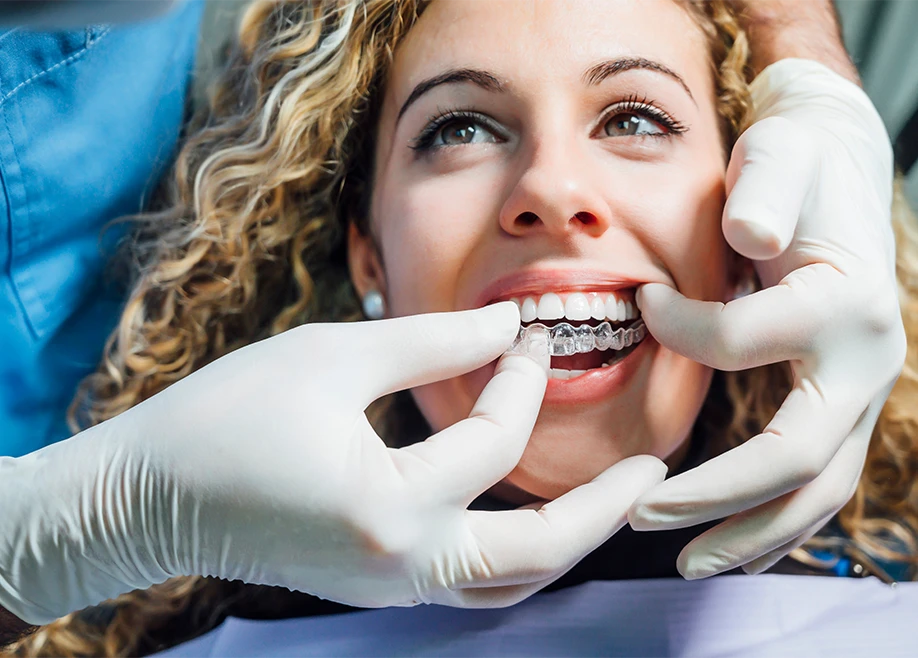
The 19th July is International Retainer Day, and it got me thinking about one of the conversations I have regularly with patients.
Do you know where your retainer is?
For some of you, the answer will be easy.
“It’s in the bathroom.”
“I wear it every night.”
“It’s safely in its case.”
But for others, there may be a moment of panic…
“I’m not sure!”
“I think it’s in a drawer somewhere.”
“I haven’t worn it for years.”
And if that’s you, you’re definitely not alone.
You’ve invested in your smile – now protect it
Many people spend months, sometimes years, straightening their teeth.
Whether you’ve had fixed braces, Invisalign or another type of orthodontic treatment, there is usually a huge sense of excitement when the day arrives and your braces come off or your aligners are finished.
You look in the mirror and think:
“Wow, I love my smile.”
But one thing I always explain to patients is that orthodontic treatment doesn’t really end when the teeth are straight.
That’s when the retention phase begins.
I often tell my patients that teeth have memories…
Now, teeth don’t actually have memories, of course!
But it’s a simple way of explaining something that is difficult to describe.
Teeth have a natural tendency to move.
The tissues around your teeth, including the fibres that support them, have been stretched and adapted during orthodontic treatment. Over time, these tissues continue to change, and your teeth can gradually drift.
It’s also important to remember that our teeth naturally change as we get older. Just like our skin, muscles and joints, our mouths are not static.
This is why retainers are so important.
This is why retainers are so important.
A retainer is not a punishment – it’s protection
Sometimes patients tell me:
“But I’ve finished my treatment, why do I still need to wear something?”
I completely understand that feeling.
You’ve done the hard work.
But your retainer is what helps protect the result you worked so hard to achieve.
Think of it like looking after anything valuable. If you have invested time, effort and money into something, you want to maintain it.
Your smile is no different.
Current orthodontic recommendations support long-term retention for many patients because teeth can continue to move after treatment.
Fixed or removable retainers?
There isn’t one solution that works for everyone.
Some patients have a small bonded wire behind their teeth. Others wear clear removable retainers at night. Some people need a combination of both.
The right option depends on your teeth, your orthodontic treatment and your individual circumstances.
The important thing is having a plan and sticking to it.
Looking after your retainer
A few simple habits make a big difference:
- Wear your retainer as advised.
- Keep it clean.
- Store it safely in its case.
- Don’t leave it wrapped in a tissue or napkin (we’ve all heard the restaurant bin stories!).
- If it cracks, breaks or stops fitting properly, get it checked.
And if you’ve stopped wearing it for a while, don’t just force it back in.
It’s always better to ask for advice.
Why this matters at Curzon Park Dental
At Curzon Park Dental, we often talk about putting the mouth back into the body.
For me, that means looking beyond just what we can see.
A healthy smile isn’t only about having straight, white teeth. It’s about maintaining good oral health, protecting your teeth for the future and helping you keep the results you’ve invested in.
Prevention is always better than having to correct problems later.
So today, on International Retainer Day, take a minute to ask yourself:
Where is my retainer?
Is it being worn?
Does it still fit?
Does it need replacing?
Because your future smile will thank you for it.
If you’ve had orthodontic treatment and you’re unsure whether your retainer is still doing its job, we’d be happy to help. Sometimes a simple check now can prevent bigger changes later.